Running a successful outreach team means balancing growth with safety. Multi-account management is powerful-but it's also risky if you don't get the fundamentals right.
This guide breaks down team operations for X outreach: how to structure teams, implement compliance controls, use automation responsibly, and scale without getting banned.
What is Team Operations in Multi-Account Outreach?
Team operations refers to the systems, processes, and tools that enable multiple team members to manage multiple X accounts safely and efficiently.
Unlike solo outreach (where one person manages one account), team operations involves:
- Multiple accounts owned by different people or entities
- Shared infrastructure (proxies, email addresses, workspace management)
- Compliance controls to prevent account bans
- Performance tracking across the entire team
- Automation workflows coordinated across multiple accounts
According to industry data, teams using proper operational frameworks see 3-4x better reply rates and significantly lower ban rates compared to unstructured outreach efforts.
Why Multi-Account Management Matters for Scaling
X has strict rate limits and behavioral patterns designed to catch spam and coordinated inauthentic behavior. When you scale from 1 account to 10 or 100, you're operating in a completely different risk environment.
A single account sending 50 DMs per day looks normal. Ten accounts each sending 50 DMs per day can trigger platform detection if not done carefully.
Proper team operations reduce risk through:
- Distributed activity: Spreading DMs, follows, and engagement across multiple accounts with realistic patterns
- Isolated failures: If one account gets flagged, others continue operating
- Higher throughput: More accounts = more total prospects, managed safely
- Team scalability: Multiple team members handling different accounts and workflows
Teams that implement proper operational controls report ban rates below 2%, while unstructured teams often see 15-25% account loss in the first 90 days.
Structuring Your Outreach Team
Team Roles and Responsibilities
A well-organized outreach team typically includes these roles:
- Outreach Manager: Oversees strategy, targets, and compliance. Manages the overall program.
- Account Operators: Own and manage individual X accounts. Send DMs, engage with prospects, and monitor performance.
- List Manager: Researches and builds prospect lists. Ensures targeting is accurate and compliant.
- Copywriter: Creates templates, sequences, and messaging. A/B tests copy for higher reply rates.
- Data Analyst: Tracks metrics, identifies bottlenecks, and optimizes workflows.
For smaller teams, one person may wear multiple hats. The key is clarity about who owns what.
Account Allocation Models
There are three main ways to allocate accounts to team members:
Model 1: Account-Per-Person
Each team member owns 1-3 dedicated accounts. They manage the entire workflow for those accounts: list building, sending, follow-ups, and engagement.
Pros: Clear ownership, easier compliance tracking, higher personalization
Cons: Slower scale, requires more hiring
Model 2: Specialized Workflow
Team members specialize in specific tasks across all accounts. One person manages list building for all 20 accounts. Another manages DM sequences.
Pros: Faster iteration, economies of scale, easier to optimize single tasks
Cons: More complex coordination, higher risk if one person leaves
Model 3: Hybrid
Combine both models. Account operators own their accounts but work with specialized copywriters and list managers.
Pros: Balance of ownership and scale, best for mature teams
Cons: Requires strong operational discipline
Most successful teams start with Model 1 (account-per-person) and graduate to Model 3 as they grow.
Compliance and Safety Controls
Account Setup and Authentication
How you set up accounts directly impacts ban risk. Follow these fundamentals:
- Unique identities: Each account should represent a real person or entity. Use different names, bios, and profile photos.
- Realistic account history: Don't create bulk accounts all at once. Space account creation over weeks. Aged accounts (30+ days) have lower ban risk.
- Proxy rotation: Use residential proxies tied to account IP addresses to avoid detection. Each account should have a consistent IP (not constantly rotating).
- Device fingerprinting: When possible, have different team members access accounts from different devices with different browsers.
- Phone verification: Verify accounts with real phone numbers when possible. Use a service like Twilio to manage multiple numbers.
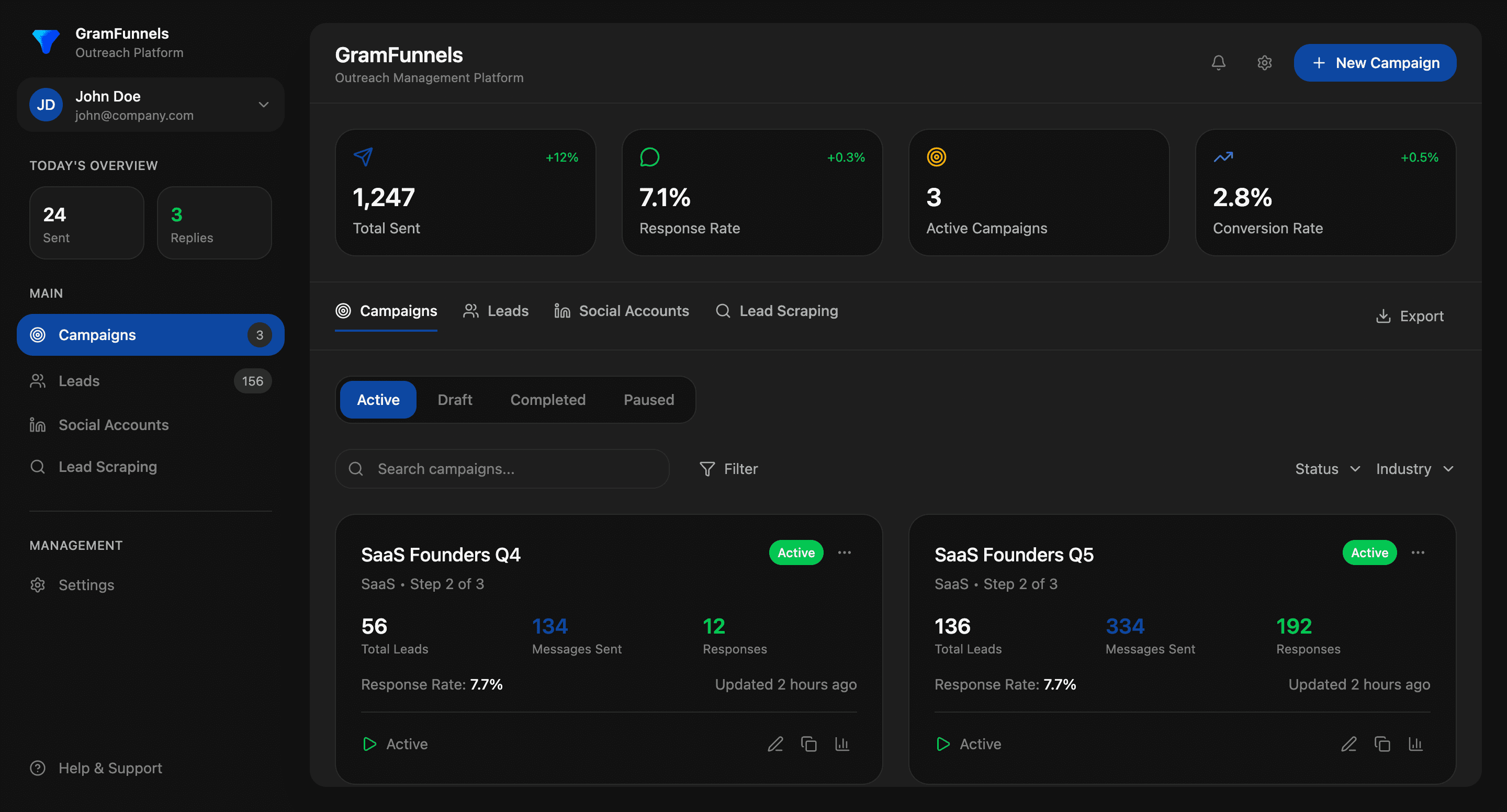
GramFunnels includes built-in proxy infrastructure and account management tools to simplify this process.
Daily Action Caps and Rate Limits
X enforces limits on daily actions. Operating within these limits is non-negotiable for team safety.
Recommended safe daily limits per account:
- Direct Messages: 40-50 DMs per day (increase gradually; new accounts start at 10-20)
- Follows: 100-150 follows per day
- Unfollows: 50-100 unfollows per day
- Likes: 100-200 likes per day
- Replies: No hard limit, but avoid spammy patterns
These are conservative estimates. Actual limits depend on account age, history, and platform dynamics. Monitor your team's data closely to identify when accounts approach danger zones.
Monitoring and Early Warning Systems
Set up alerts for warning signs:
- DM delivery failures: If 10%+ of DMs fail to deliver, the account is likely shadow-banned.
- Reply rate drops: Sudden decline in replies suggests reduced visibility.
- Engagement rate changes: Watch for unexpected drops in likes, follows, or other engagement.
- Account restrictions: X sometimes restricts accounts temporarily. Monitor for these notices.
Tools like GramFunnels provide real-time dashboards showing delivery rates and account health metrics across all team accounts.
Automation Workflows for Teams
DM Sequences and Cadence
Automating DM sequences saves time but must be done carefully to maintain compliance and authenticity.
Safe Automation Practices:
- Use delay intervals: Space out automated DMs with 1-3 hour delays between actions. This mimics human behavior.
- Template variation: Rotate through 3-5 message templates so recipients don't see identical DMs.
- Conditional logic: Only send follow-up sequences if the prospect hasn't replied. Avoid spamming engaged prospects.
- Personalization tokens: Include prospect name, company, and other unique details to avoid generic-looking sequences.
- Manual review gates: For high-value prospects, have a team member manually review and send DMs rather than fully automating.
Follow-Up and Engagement Automation
Engagement-based follow-ups convert better than time-based ones:
- Engagement tracking: If a prospect likes your tweet, automatically add them to a follow-up sequence.
- Reply monitoring: When a prospect replies to a DM, pause the automated sequence and let a human take over.
- Win-back campaigns: If someone unsubscribes or marks you as spam, stop all outreach to that account immediately.
GramFunnels includes AI-powered automation and condition-based workflows designed specifically for X outreach teams.
Tools and Infrastructure for Team Operations
Core Requirements
Running a professional outreach team requires:
- Automation platform: Handle DM sequences, targeting, and delivery across multiple accounts
- Proxy infrastructure: Rotate residential proxies to avoid IP-based detection
- Email management: Unique email addresses for each account (use services like SimpleLogin or temporary email)
- CRM or tracking spreadsheet: Track prospects, conversations, and conversions
- Team communication tool: Slack or similar for coordination between operators
- Analytics dashboard: Unified view of metrics across all accounts
Choosing the Right Automation Platform
When evaluating automation tools for team operations, look for:
- Multi-account support: Manage 10+ accounts from a single dashboard
- Proxy integration: Built-in or seamless third-party proxy support
- Rate limiting controls: Set different daily caps per account
- Team collaboration features: Assign accounts to team members, track activity logs
- Safety first: Tools designed to stay within X's limits, not to push them
- CRM syncing: Export leads and conversations to your sales stack
Tools like GramFunnels are purpose-built for X automation with team operations features baked in.
Metrics and Performance Tracking
Key Metrics for Team Operations
Track these metrics for each account and across your team:
- Delivery rate: % of DMs that successfully deliver (should be 95%+)
- Reply rate: % of delivered DMs that get a reply (industry average: 2-8% depending on industry)
- Conversation-to-meeting rate: % of replies that convert to sales meetings
- Cost per conversation: Total spend divided by replies received
- Account health score: Composite metric combining delivery rate, reply rates, and safety signals
- Team utilization: DMs sent per account per day vs. safe limits
Reporting and Optimization
Set up weekly reporting to identify what's working:
- Top performing accounts: Which accounts have the best reply rates? What are they doing differently?
- Best-performing sequences: Which message templates convert highest? Share wins with the team.
- Safety trends: Are any accounts showing warning signs? Flag these immediately.
- Bottlenecks: Is list quality the issue? Copy? Targeting? Identify and fix.
Use data to optimize, not to scale blindly. A team with 20 accounts sending mediocre outreach will fail. A team with 5 accounts optimizing every variable will win.
Compliance Best Practices
Staying Within Platform Guidelines
X's terms of service prohibit:
- Coordinated inauthentic behavior (operating many accounts as a network)
- Spam and unsolicited bulk messaging
- Misleading identities or impersonation
- Aggressive automation patterns
To stay compliant:
- Authentic representation: Each account should represent a real person with genuine interests
- Organic-looking activity: Mix DMs with tweets, likes, and genuine engagement
- Responsive listening: Build outreach based on what prospects actually care about, not generic targeting
- Respect opt-outs: Honor unsubscribe requests immediately
Documentation and Audit Trails
Keep records of:
- Who owns each account
- IP addresses and proxies assigned to each account
- Daily activity logs (automated exports from your platform)
- Any account restrictions or warnings from X
- Targeting criteria and list sources
If X ever asks questions about your team's activity, detailed documentation can be the difference between reinstatement and permanent suspension.
Common Mistakes and How to Avoid Them
Mistake 1: Identical Templates Across All Accounts
Problem: Prospects recognize your messaging pattern, X's algorithms detect coordinated behavior
Solution: Create 3-5 template variations per sequence. Rotate them randomly.
Mistake 2: Scaling Too Fast
Problem: Add 10 new accounts all sending max DMs immediately. X detects the coordinated spike.
Solution: Ramp gradually. New accounts start at 10-20 DMs/day. Increase by 10/day every week if account stays healthy.
Mistake 3: Ignoring Account Age
Problem: Brand new accounts have higher ban risk
Solution: Age accounts for 30+ days with organic activity before including in outreach campaigns. Have team members tweet, like, and engage authentically.
Mistake 4: Single Point of Failure
Problem: Only one person knows the login for all accounts. If that person leaves, you lose access.
Solution: Use a password manager (like 1Password) with proper access controls. Back up authentication details securely.
Mistake 5: No Compliance Monitoring
Problem: You don't know accounts are getting shadow-banned until reply rates collapse
Solution: Daily monitoring dashboard. Set alerts for delivery rate drops below 90%.
Scaling Your Team Operations
From 5 to 50 Accounts
As you scale, systematize everything:
- Standard operating procedures: Document how to set up new accounts, manage sequences, monitor health
- Automated provisioning: Scripts to set up proxies, email addresses, and automation workflows quickly
- Team roles: Hire specialists for list building, copywriting, and account management
- Compliance automation: Use your platform's rate limiting and safety controls religiously
- Performance benchmarks: Define what success looks like (reply rate targets, meeting rate targets) and hold the team accountable
Technology Stack for Scaling
Mature teams typically use:
- X automation platform (GramFunnels for multi-account coordination and automation)
- Proxy service (residential proxies, often included in automation platforms)
- Email provider (for creating unique email addresses)
- CRM (HubSpot, Salesforce, or custom tool)
- Analytics (built into automation platform or connected via API)
- Spreadsheets/BI tool (for reporting and analysis)
Conclusion
Team operations for multi-account outreach is complex, but the fundamentals are straightforward:
- Structure: Clear roles and account allocation
- Compliance: Respect X's limits and anti-spam policies
- Automation: Use tools to scale efficiently without automation looking robotic
- Monitoring: Track account health and team metrics religiously
- Optimization: Constantly test and improve based on data
Teams that master these foundations can scale to 50, 100, or more accounts while maintaining high reply rates and low ban rates. Teams that ignore them fail quickly.
Start with proper account setup and compliance controls. Layer on automation gradually. Monitor obsessively. Scale only when the fundamentals are working. Follow this formula and you'll build an outreach machine that actually works.