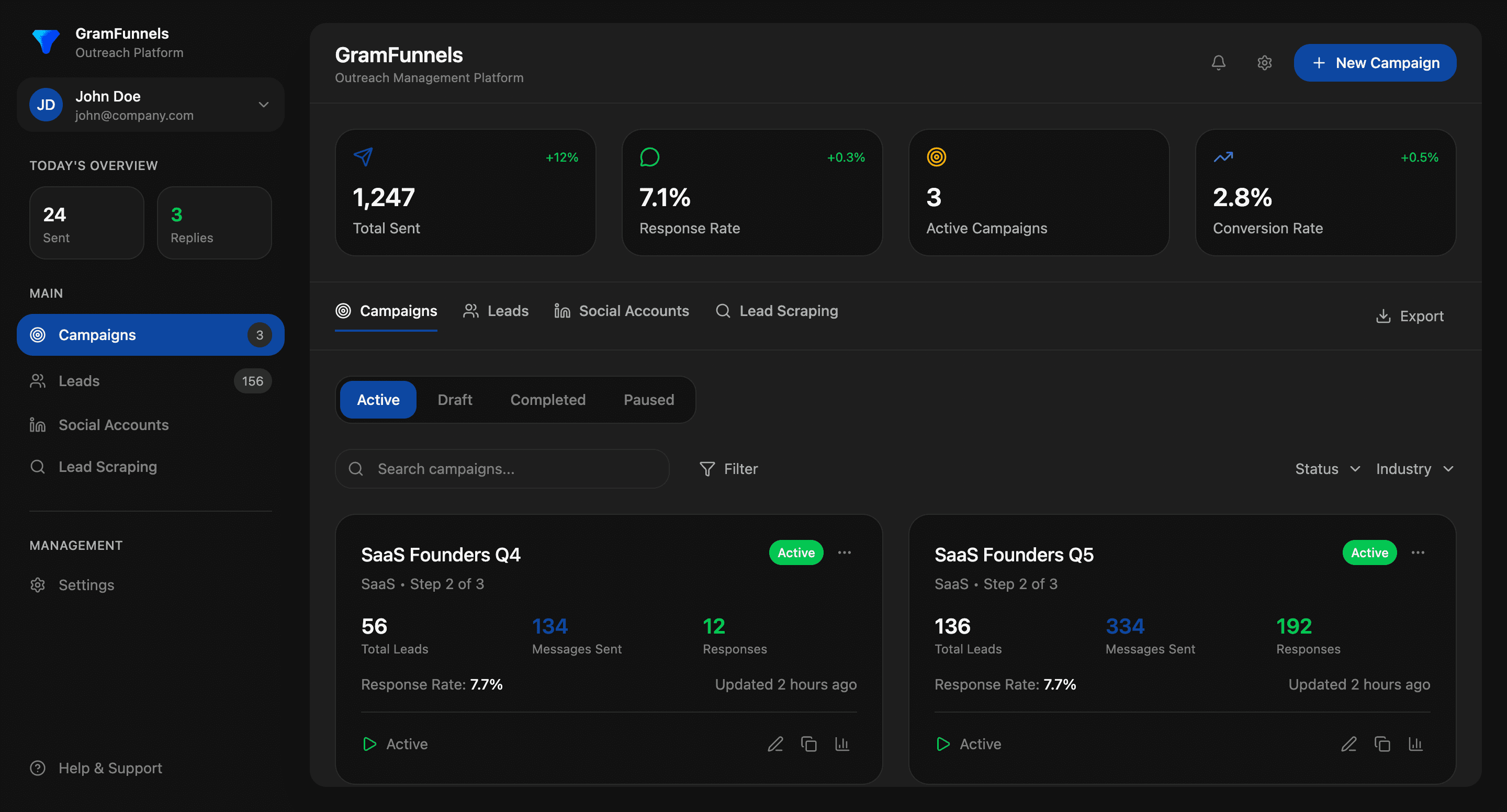
Reply Rate Optimization: Proven Strategies for X Outreach Teams
Reply rate optimization might be the most underrated metric in your outreach arsenal. While many teams obsess over vanity metrics like followers and impressions, the teams actually generating revenue focus on one thing: how many people respond to their cold DMs.
A 5% reply rate on 100 outreach messages equals 5 conversations. A 15% reply rate on the same 100 messages equals 15 conversations. That difference compounds fast when you're running multi-account outreach teams.
This guide covers the systems, strategies, and safety practices that high-performing outreach teams use to optimize reply rates on X while scaling sustainably.
Understanding Reply Rate Optimization on X
Reply rate optimization is the strategic process of increasing the percentage of people who respond to your direct messages. On X, this metric matters because:
- It measures engagement quality: A reply indicates genuine interest, not just reach
- It reduces CAC: Higher reply rates mean fewer outreach messages needed to generate conversations
- It improves compliance: Teams with higher reply rates send fewer total messages, reducing platform risk
- It scales your revenue: More conversations directly correlate with more qualified leads and closed deals
Most B2B outreach teams operate with a 3-8% baseline reply rate. Industry leaders consistently achieve 12-20% reply rates. The difference isn't luck-it's systematic optimization across targeting, messaging, timing, and account management.
Why Reply Rate Matters More Than Open Rate
On X, there's no "open rate" metric like email marketing. But reply rate is the closest equivalent-and it's actually more valuable. Here's why:
Replies indicate intent. When someone replies to your DM, they've made a conscious choice to engage. This is a high-intent signal that maps directly to sales pipeline.
According to research from Sales.com on cold outreach benchmarks, conversations that start with permission-based, targeted outreach convert 2-3x higher than mass messages. On X, reply rate is your proxy for permission-based engagement.
A team sending 500 messages per day with a 5% reply rate generates 25 conversations. The same team optimizing for reply rate might send 300 messages with a 15% reply rate, generating 45 conversations-while actually reducing total outreach volume and compliance risk.
Core Strategies for Reply Rate Optimization
1. Obsess Over Targeting Precision
The biggest reply rate killer isn't your message-it's reaching the wrong person. Many teams automate targeting with basic keyword matching, then wonder why replies disappear.
Implement multi-layer targeting:
- Job title + company size: Target "VP Sales at 10-100 person SaaS companies," not just "sales people"
- Intent signals: Look for recent hires in sales/marketing roles, profile bio updates, recent tweets about growth challenges
- Account engagement: Prioritize accounts actively tweeting about your solution category over dormant followers
- Timezone alignment: Reach prospects during their business hours when engagement naturally increases
GramFunnels' keyword targeting system allows you to layer these filters before sending any message. This precision targeting directly impacts reply rates because you're reaching people actually interested in your offer, not just people with certain keywords in their bio.
2. Master the First-Message Framework
Your opening message is everything. It needs to accomplish three things in 2-3 sentences:
- Signal relevance: Show you know something specific about them
- Create curiosity: Make them wonder why you're messaging
- Lower the response barrier: Ask something easy to respond to, not a sales pitch
High-performing first message structure:
"Hi [Name], noticed you just got promoted to [role] at [company]. We work with similar companies on [specific problem]. Worth a quick chat to see if it applies? [low-friction question]"
Notice what's absent: price, features, long value propositions, calls to action. Your first message is designed to start a conversation, not close a sale.
Learn more about writing high-converting DM copy at scale.
3. Implement Strategic Message Sequencing
Optimization isn't about a single message-it's about a sequence. Most teams send one DM, get no response, and move on. This leaves 70-80% of eventual replies on the table.
Optimal X DM sequencing for B2B outreach:
- Day 1, Message 1: The relevance + curiosity message (as described above)
- Day 3, Message 2: Reference a recent tweet they made or company news. Provide specific insight. Ask for feedback
- Day 7, Message 3: Different angle. Maybe a case study or question about their specific role
- Day 10, Message 4: "Final check-in." Share something valuable. Soft close with clear next step
This sequencing respects your prospect's time while creating multiple reply opportunities. Different messages convert different people-some reply to message 1, others to message 3.
Read our complete guide on DM sequences and cadence.
4. Optimize Send Timing
Send time impacts reply rate more than most teams realize. The same message gets different response rates depending on when it lands in someone's inbox.
Timing principles for X DMs:
- Tuesday-Thursday perform best: Data from HubSpot's 2024 outreach report shows these days have 18-22% higher engagement than Monday or Friday
- 9 AM - 11 AM is peak window: Prospects are settling into work, checking messages, before meetings dominate
- 5 PM - 6 PM secondary window: People wrapping up work often check messages with fresh perspective
- Avoid weekends and 6 PM - 8 AM: Low engagement, high unfollow risk
GramFunnels allows you to schedule outreach and sequences on optimal days and times. Many teams using manual sending miss this entirely-automation lets you capture timing advantages at scale.
5. Personalization at Every Layer
Generic personalization tokens ("Hi {{firstName}}") don't cut it anymore. Sophisticated prospects notice immediately.
Advanced personalization strategies:
- Reference specific recent activity: "Saw you promoted [specific person] to [role] last month. We helped [similar company] scale that function 40% faster"
- Use LinkedIn research (off-platform): Check their LinkedIn before sending to understand their background and recent moves
- Acknowledge mutual connections: "Saw you're connected to [mutual person] from [company]"
- Industry-specific language: Use terminology and pain points from their specific vertical
Personalization doesn't scale at the message level-it scales at the targeting level. When you reach exactly the right person with a message that resonates to their specific situation, personalization becomes natural.
Scaling Reply Rate Optimization with Multi-Account Teams
Multi-account outreach teams face unique reply rate challenges. Each account has its own sending history, relationship to the platform, and compliance risk. Optimizing reply rates while maintaining account safety requires systematic approach.
Account Rotation and Warmup
Using multiple accounts for outreach is necessary for scale-but it increases reply rate risk if accounts aren't properly warmed up.
- New accounts need 2-3 weeks of natural activity: Follows, likes, retweets before cold outreach. This "warmup period" improves reply rates by 20-30%
- Rotate accounts strategically: Don't let one account send more than 50-70 messages per day. Spread volume across accounts to maintain compliance
- Monitor account health metrics: Track blocks, unfollows, and restricted DMs. If an account's reply rate suddenly drops 30%+, the account may be flagged
Read our comprehensive guide on running multi-account outreach safely.
Maintaining Account Authenticity
The biggest reply rate killer in multi-account teams is inauthentic accounts. Prospects can tell when they're interacting with a generic outreach account versus a real person.
Keep accounts authentic:
- Write genuine bios that reflect the account's real purpose or the person managing it
- Maintain original content-retweets, occasional tweets, not 100% outreach
- Engage with prospect content before sending outreach when possible
- Assign accounts to individual team members who become the "face" of the account
Authentic accounts get 30-50% higher reply rates because prospects trust they're talking to a real person, not a bot.
Proxy Infrastructure and Compliance
Running large multi-account teams on the same IP address or with identical sending patterns is a quick way to trigger platform restrictions. Proper infrastructure maintains account health and reply rates.
- Use residential proxies: Distribute account activity across different IPs to appear as separate users
- Vary sending patterns: Don't send identical sequences at identical times from all accounts
- Maintain realistic human behavior: Include delays, randomization, and occasional manual interaction
Explore X automation safety practices and account protection strategies.
Measuring and Tracking Reply Rate Optimization
You can't optimize what you don't measure. Most teams track reply rate, but they miss the diagnostic metrics that actually drive optimization.
Essential Reply Rate Metrics
- Overall reply rate: Total replies ÷ total messages sent
- Reply rate by account: Track which accounts generate highest reply rates (indicates health and authenticity)
- Reply rate by message variation: A/B test different opening lines and track response lift
- Reply rate by targeting segment: Which prospect profiles reply most? This tells you where your ICP actually is
- Reply latency: How quickly do people reply? Same-day replies indicate high interest, while 3+ day replies suggest lower engagement
- Conversion rate from reply to next step: Not all replies are equal. Some convert to calls, others fade
Master X outreach metrics and KPIs that drive results.
Creating a Reply Rate Dashboard
High-performing teams track reply rate daily and adjust strategies weekly. A basic tracking system should measure:
- Daily messages sent (by account)
- Daily replies received
- Daily reply rate %
- Week-over-week reply rate trend
- Reply rate by message sequence step
When you see reply rate drop 20%+ suddenly, it's a signal to investigate: Did you change messaging? Did an account get flagged? Did targeting shift? Real-time visibility lets you catch problems before they tank your pipeline.
Common Reply Rate Optimization Mistakes to Avoid
Over-Sending Without Segmentation
Blasting 1,000 messages with 2-3% reply rate isn't scaling-it's burning out accounts and audiences. Segmentation and quality-first approach generates better outcomes.
Ignoring Compliance Signals
When reply rates drop 30%+ or you notice accounts getting restricted, that's your signal to dial back volume and reassess strategy. Compliance violations destroy reply rates and revenue.
Treating All Replies as Equal
A reply that says "not interested" isn't the same as a reply that schedules a call. Track conversion from reply to next step (call booked, demo scheduled, etc.)-not just raw reply rate.
Setting and Forgetting Message Sequences
The best sequences get tested, optimized, and refined. If you haven't changed your message in 3 months, you're leaving replies on the table. Most teams can increase reply rates 25-40% with message refinement alone.
Neglecting Account Warmup
New accounts need authentic activity before cold outreach. Skipping the warmup phase crushes reply rates and increases ban risk. Build 2-3 week warmup into your account pipeline.
Advanced Reply Rate Optimization Tactics
Conversation Continuation Strategy
The first reply is just the beginning. How you continue the conversation determines whether it becomes a sales opportunity.
- Ask follow-up questions: Don't pitch when they reply. Ask what they're working on, what challenges they face
- Share relevant resources: Send a case study, article, or insight related to their response
- Move to calls quickly: After 2-3 back-and-forth messages, offer a quick 15-minute call if there's mutual interest
Seasonal and Event-Based Targeting
Reply rates spike when you reach people at the right moment in their journey:
- Recent job changes: People 2-4 weeks into new roles are most receptive to outreach about their new function
- Company funding announcements: Sales teams at newly funded companies are hiring and solving new problems
- Industry events: Track major conferences where your ICP attends, then reach out 1 week after with insights from the event
Social Proof Integration
Mentioning recent customers in your messaging lifts reply rates 15-25%.
"Just helped [similar company in their space] solve [specific problem]. Thought it might be relevant given [insight about their company]."
Integrating Reply Rate Optimization into Your Outreach Stack
Reply rate optimization doesn't exist in isolation-it's part of a complete outreach system that includes targeting, messaging, sequencing, and CRM integration.
Learn how to integrate X outreach with your CRM for seamless pipeline management.
When replies come in, they need to immediately flow into your sales system so reps can follow up. The gap between a reply and first contact is a critical conversion point.
Final Thoughts: Reply Rate as Your Core North Star
Reply rate optimization separates productive outreach operations from those burning money on scale without results. The teams generating real revenue on X don't chase vanity metrics-they obsess over the percentage of people who actually reply.
Start with one optimization: Improve your targeting precision this week. Measure the impact on reply rate next week. Then add one more optimization the following week. Compounded improvements across targeting, messaging, timing, and sequencing create the 12-20% reply rates that drive sustainable revenue.
Scale responsibly, measure religiously, and optimize continuously. That's the formula for reply rate optimization that actually works.