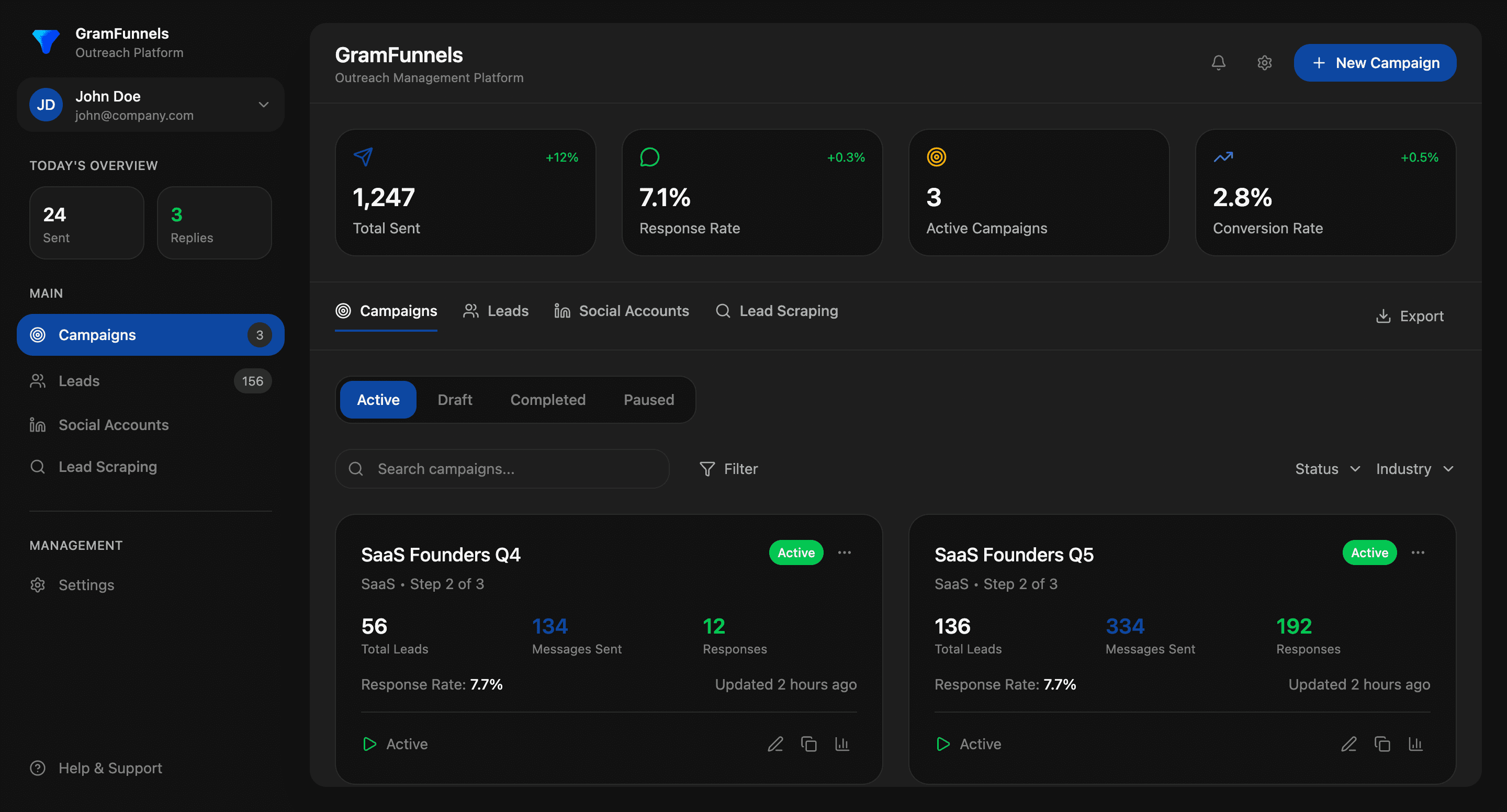
Pipeline management on X (formerly Twitter) isn't about juggling contact lists-it's about building a predictable system that moves prospects from initial contact to closed deal. For B2B teams running cold outreach, an effective pipeline management strategy determines whether your outreach effort generates consistent revenue or becomes a scattered, inefficient mess.
The difference between successful X outreach programs and failed ones often comes down to how well you manage your pipeline from first touchpoint through close. This comprehensive guide walks you through the essential components of pipeline management for X outreach, including how to structure your campaigns, automate your workflows, and track the metrics that actually matter.
What is Pipeline Management for X Outreach?
Pipeline management in the context of X outreach refers to the systematic process of tracking, organizing, and nurturing prospects through your sales funnel using Twitter/X as your primary channel. Unlike traditional pipeline management, which might span email, calls, and meetings, X-based pipeline management is specifically designed for cold DM outreach at scale.
The core components include:
- Lead sourcing and segmentation: Identifying and categorizing prospects based on fit and interest signals
- Automated sequences: Setting up multi-touch DM campaigns that engage prospects over time
- CRM integration: Syncing X interactions with your sales stack to maintain a single source of truth
- Performance tracking: Monitoring key metrics like reply rates, conversion rates, and qualified pipeline value
- Team coordination: Managing multiple team members running outreach without creating duplicates or compliance issues
According to HubSpot's State of Sales report, organizations with structured pipeline management processes see a 28% higher win rate compared to those without formal systems. For X outreach specifically, the difference is even more pronounced because you're managing automation and scale.
The Foundation: Strategic Planning Before You Launch
Many teams jump straight into launching X outreach campaigns without the foundational planning that makes pipeline management effective. This leads to wasted effort, compliance issues, and poor ROI.
Start by defining your outreach thesis-the core hypothesis about which prospects will respond to your message and why. Ask yourself:
- Who is my ideal customer profile (ICP)?
- What specific problem am I solving for them on X?
- Why would they engage with a cold DM from me specifically?
- What's the clear call-to-action that moves them to the next stage?
This clarity informs everything downstream in your pipeline. For example, a B2B SaaS company targeting startup founders interested in growth hacking will use different messaging, sequencing, and targeting criteria than one selling enterprise security solutions to CTOs at Fortune 500 companies.
Next, map out your ideal customer journey on X:
- Discovery phase: Identify prospects through keyword targeting and engagement with relevant content
- Initial outreach: Send a personalized first DM that references their X activity or profile
- Engagement sequence: Follow up with 2-3 additional touches over 5-10 days
- Qualification: Move to direct conversation, discovery call, or meeting
- Handoff: Pass qualified leads to sales team with full context
This mapped journey becomes your pipeline management framework. Every stage should have clear exit criteria and success metrics.
Building Your Lead Source: Targeting and Segmentation
Your pipeline is only as good as the leads entering it. On X, this means getting strategic about who you're reaching out to and how you're organizing them.
X outreach tools like GramFunnels use keyword targeting to identify prospects in real-time. Instead of manually searching for prospects, you define keywords and parameters that match your ICP, and the system automatically identifies and prioritizes matching accounts. This is far more scalable than manual list-building.
Effective segmentation strategies include:
- Role-based segmentation: Separate CTOs from marketing leaders-they need different value props
- Company size targeting: Segment by follower count or company size; smaller companies may buy faster but have smaller budgets
- Engagement level: Prioritize users actively tweeting about your problem space over inactive accounts
- Geographic or industry tags: Some solutions are location or vertical-specific
- Intent signals: Users mentioning specific competitors or pain points show higher intent
Once you've built your prospect lists, your pipeline management system should organize them by segment and readiness stage. A prospect who just tweeted about needing a solution in your space is hotter than someone who might be tangentially interested in six months.
This segmentation directly impacts your conversion metrics and pipeline quality. McKinsey research shows that properly segmented outreach campaigns see 20-30% higher engagement rates than one-size-fits-all approaches.
Automating Your Sequences: The Engine of Your Pipeline
Once leads enter your pipeline, they need consistent, strategic touches to move through stages. This is where automation becomes critical-but it must be done thoughtfully.
A well-designed automated sequence for X might look like:
- Day 0: Initial DM - Personalized first message referencing their profile or recent tweet (1,200-2,000 accounts/day max to avoid spam flags)
- Day 3: First follow-up - If no reply, send a soft follow-up providing additional value
- Day 6: Second follow-up - Shift messaging to urgency or exclusivity
- Day 9: Final touch - Make a clear ask or suggest moving off-platform
The key to pipeline management through automation is respecting platform safety limits while maximizing throughput. Sending too many messages too fast triggers spam detection, damaging your account and pipeline. GramFunnels' infrastructure handles rate limiting intelligently, spreading sends across your account's safe thresholds while monitoring account health in real-time.
Your pipeline management system should track which stage each prospect is in within the sequence:
- Awaiting initial send
- Initial sent, waiting for reply
- In sequence, touch #2 pending
- Replied to outreach
- Qualified for sales team
- Not interested / churned
This visibility prevents missed follow-ups and ensures consistent progression. See our complete guide on building high-converting DM funnels for deeper tactical guidance.
Tracking Pipeline Metrics That Drive Revenue
Pipeline management without metrics is like flying blind. You need clear, actionable visibility into what's working and what's not.
The essential pipeline metrics for X outreach include:
- Leads in pipeline: Total number of prospects in your system across all stages
- Reply rate: Percentage of sent DMs that receive a response (typical: 3-12% depending on targeting and messaging)
- Response rate: Of those who reply, what percentage engage in meaningful conversation
- Qualified leads: Prospects who meet your ICP criteria and show buying intent
- Conversion rate: Percentage of outreach that results in a scheduled meeting or demo
- Qualified pipeline value: Expected revenue from qualified prospects, weighted by probability of close
- Cost per qualified lead: Tool and labor cost divided by qualified leads generated
- Sales cycle velocity: Average time from initial DM to closed deal
Strong pipeline management means setting benchmarks for each metric and regularly analyzing what moves the needle. If your reply rate drops from 7% to 4%, something changed-targeting, messaging, or account health. Your pipeline management system should surface these issues quickly.
For deeper metrics strategy, review our complete guide to outreach metrics that drive sales success.
CRM Integration: The Central Nervous System of Pipeline Management
Pipeline management breaks down without a central system of record. Your CRM should be the single source of truth for all prospect interactions across X and other channels.
Effective CRM integration for X outreach enables:
- Automatic lead creation: When someone replies to your DM, they're automatically added to your CRM
- Conversation context: Sales team can see the full DM history when they pick up a prospect
- Pipeline stage visibility: Track whether someone is in early outreach, has replied, or is scheduled for a call
- Duplication prevention: System prevents multiple team members from reaching out to the same person
- Workflow automation: Trigger follow-up tasks, meeting reminders, and handoffs automatically
GramFunnels integrates with major CRM platforms to sync your X outreach pipeline seamlessly. This prevents the scenario where marketing says a prospect is hot while sales has no context, or where multiple team members waste time contacting the same person.
See our complete CRM integration guide for setup instructions and best practices.
Team Operations and Pipeline Governance
As you scale pipeline management across a team, governance becomes essential. Without clear rules, you'll face overlapping outreach, compliance violations, and damaged account health.
Key governance areas include:
- Account assignment: Which team members manage which prospect segments or accounts
- Daily action caps: How many DMs each account can safely send per day (typically 50-200 depending on account age and history)
- Sequence standardization: All team members follow the same sequence templates and timing
- Quality assurance: Regular audits of outreach messages for brand alignment and compliance
- Prospect ownership: Clear rules about who can reach out, in what order, and when prospects hand off to sales
For example, a high-performing X outreach program might have:
- One account running 150 sends/day across 3,000 prospects in a 20-day cycle
- Three team members each managing dedicated prospect segments
- Daily standup reviews of reply rates, engagement, and issues
- Monthly strategy meetings to adjust targeting, messaging, or sequencing based on pipeline metrics
See our guide on planning and scaling X outreach programs for team structure recommendations.
Safety and Compliance in Your Pipeline Management System
Aggressive pipeline management without safety guardrails destroys your ability to do outreach long-term. X actively monitors and penalizes accounts sending high volumes of unsolicited DMs.
Safe pipeline management practices include:
- Rate limiting: Never exceed your account's safe sending limits (platform guidelines change; monitor current compliance best practices)
- Account rotation: Distribute outreach across multiple accounts rather than overloading one
- Proxy infrastructure: Use datacenter or residential proxies to prevent IP-based rate limiting and detection
- Human-like sending patterns: Vary send times throughout the day rather than sending all messages at once
- Response monitoring: Watch for warning signs like reduced delivery, shadow bans, or declining reply rates
- Quality over quantity: Higher-quality targeting and personalization reduce your message volume while improving results
Many teams make the mistake of pushing volume so hard that their account gets restricted mid-campaign, destroying their entire pipeline. Sustainable pipeline management means optimizing for long-term account health alongside short-term conversions.
Review our guide on scaling safely without getting banned for detailed safety protocols.
Optimizing Your Pipeline: Testing and Iteration
Pipeline management is not a set-it-and-forget-it system. Continuous optimization based on real data is what separates top-performing programs from mediocre ones.
Areas to test and optimize:
- Messaging: A/B test different opening lines, value props, and CTAs. Even small improvements in reply rate compound dramatically across a large pipeline
- Timing: Test sending at different times of day or days of week to find when your ICP is most responsive
- Sequence structure: Experiment with 3-touch vs. 5-touch sequences, or different intervals between touches
- Targeting criteria: Refine your keyword targeting to find the highest-intent prospects
- Follow-up channels: Test moving qualified replies off X to email or LinkedIn for deeper engagement
Use your pipeline management system to run small controlled tests. For example, send 100 messages with messaging variant A and 100 with variant B, compare reply rates, and scale the winner. This data-driven approach prevents guesswork and compounds improvements over time.
Common Pipeline Management Mistakes to Avoid
Learning from others' errors accelerates your success. Here are the most common mistakes we see in X outreach pipeline management:
- No segmentation: Blasting the same message to all prospects regardless of fit. This tanks reply rates and wastes pipeline capacity.
- Neglecting follow-ups: Sending initial messages but not following up consistently. Most sales happen on touch 3-5, not the first contact.
- Poor CRM hygiene: Failing to log interactions, duplicate prospects, and sales team not having context when they receive inbound replies.
- Ignoring metrics: Running outreach blind without tracking what's working. You can't improve what you don't measure.
- Overloading accounts: Sending so aggressively that accounts get restricted, nuking your entire pipeline overnight.
- Static messaging: Using the same sequence for months without testing or iterating. Markets change; so should your approach.
- Team misalignment: Marketing running outreach without coordinating with sales, leading to dropped balls and missed opportunities.
Each of these mistakes directly reduces pipeline velocity and conversion rates. Avoiding them is as important as executing the fundamentals well.
Implementation: Your First 30 Days of Pipeline Management
Ready to build a structured pipeline management system? Here's a practical 30-day roadmap:
Week 1: Foundation
- Define your ICP and ideal customer journey on X
- Create 2-3 prospect segments based on your highest-probability audience
- Write initial DM templates for each segment with clear value prop and CTA
- Set up CRM to track X interactions
Week 2: Launch
- Start with manual outreach to 100-200 prospects in your highest-fit segment
- Monitor reply rates and gather feedback from sales team
- Adjust messaging based on early results
- Document what's working and what isn't
Week 3: Automate and Scale
- Move best-performing messaging into automated sequences
- Set up rate limiting and account safety monitoring
- Expand to 500-1,000 prospect target list
- Implement daily pipeline standup reviews with team
Week 4: Optimize and Plan
- Analyze full-month metrics: reply rates, response rates, conversions
- Identify top-performing segments and messaging variants
- Plan next month's experiments and optimization
- Document your process and set team success metrics
This structured approach builds pipeline management capability incrementally while validating your approach before committing to larger scale.
Scaling Pipeline Management Beyond Solo Outreach
Once you've proven your X outreach model with one account, scaling to multiple team members and accounts requires additional infrastructure.
Key considerations for team-wide pipeline management:
- Multi-account infrastructure: Running multiple X accounts safely requires separate proxies, staggered timing, and account-specific rate limits
- Prospect distribution logic: Clear rules about which accounts reach which prospects (e.g., Account A targets CTOs, Account B targets founders)
- Centralized pipeline tracking: CRM visible to entire team, preventing duplicates and enabling handoffs
- Standardized sequences: All team members use tested templates and timings
- Quality gates: Review of outreach messages before send to ensure brand consistency and compliance
See our complete guide on running multi-account outreach safely for detailed operational playbooks.
The Bottom Line: Pipeline Management is Your Competitive Advantage
In a crowded marketplace, companies with structured pipeline management systems outperform those running chaotic outreach. Pipeline management on X is no different.
The difference between a $10K/month X outreach program and a $100K/month program isn't usually better messaging or targeting-it's systematic pipeline management. Structured processes, clear metrics, CRM integration, team coordination, and continuous optimization compound into consistent, predictable revenue generation.
Start with the fundamentals: define your ideal customer journey, segment your prospects strategically, automate your sequences thoughtfully, and track metrics religiously. Build from there as you scale. The teams that execute on these basics month after month are the ones generating real pipeline value from X.
Ready to build your pipeline management system? Start with our cold DM template library and explore how automation can scale your team's outreach without sacrificing quality.